Brining 101: Understanding Brine, Nitrites, and Mastering Homemade Charcuterie
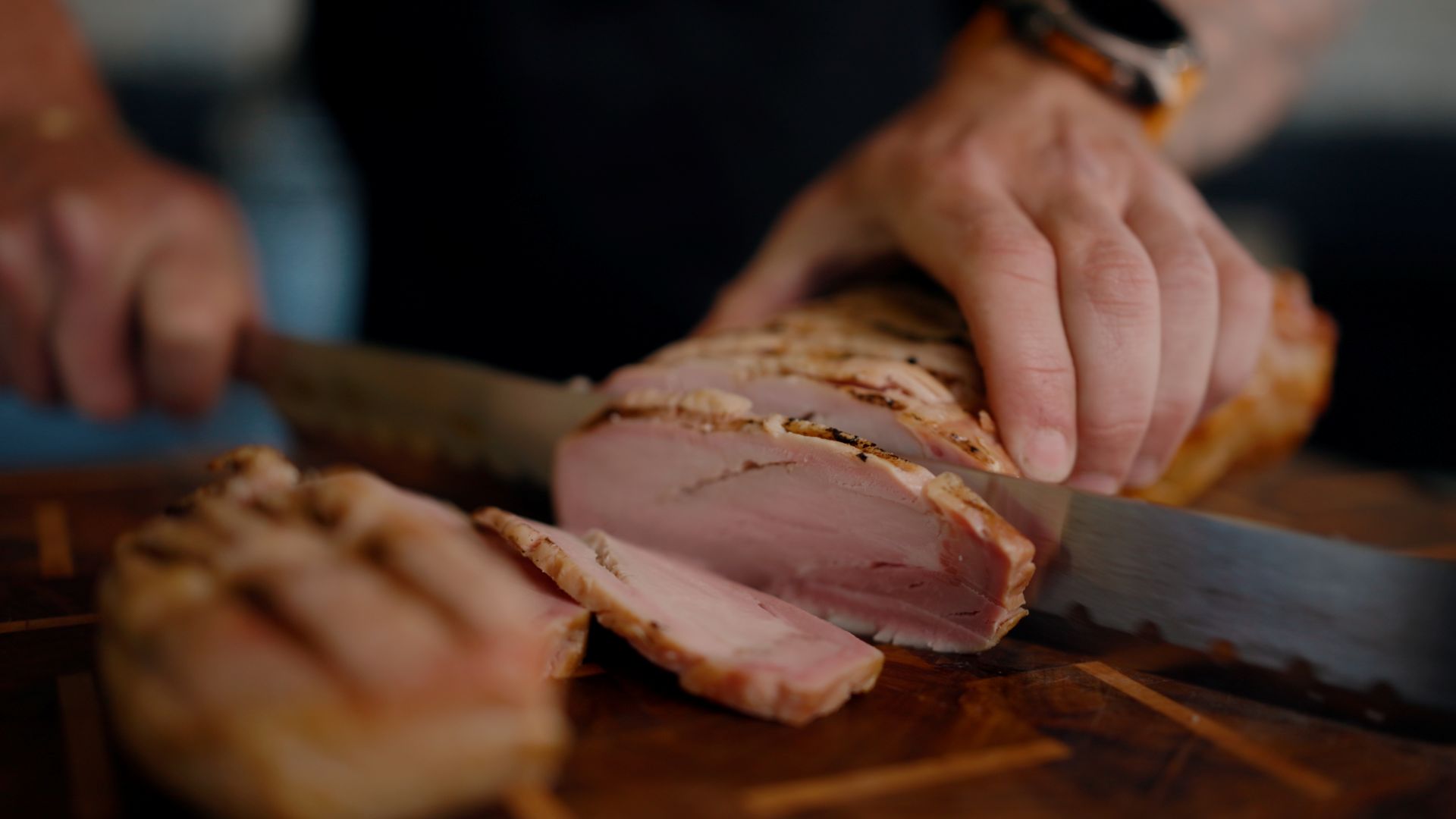
Brining is an essential technique in meat processing—but it’s also one of the most misunderstood. To guide you, Maître Fumeur shares practical advice, proven tips, and easy-to-use calculation tools to help you master your brines, curing methods, and seasoning. Whether you're learning how to brine meat for the first time or looking to refine your technique, this guide will help you understand brining, nitrites, and best practices to achieve flavorful, safe, and consistent results every time.
What is brining exactly?
Brining consists of immersing meat in a saltwater solution called brine. Brining allows for deep seasoning, improves texture (juicier meat), and extends shelf life.
It is a fundamental technique in charcuterie, smoking, and food processing.
Nitrites and nitrosamines: should you be concerned?
Nitrites and nitrates are naturally occurring molecules found in soil, air, and water. In fact, 85% of the nitrates we consume come directly from fruits and vegetables grown in the soil.
Where is the risk?
Under certain conditions (acidity and proteins), nitrites can transform into nitrosamines, compounds that may be potentially harmful.
What you need to know?
Fortunately, vitamin C blocks this reaction. That’s why foods naturally rich in vitamin C, such as fruits and vegetables, have no negative impact on health.
The solution in charcuterie: sodium erythorbate
In meat processing, a key ingredient is used: sodium erythorbate. It is an antioxidant similar to vitamin C.
Why use it?
Reduces the formation of nitrosamines
Stabilizes nitrites
Improves product safety
Key takeaway: if you are using curing salt (nitrites), erythorbate is strongly recommended.
Brine vs dry curing: understanding the difference
This is a common question—and more importantly, a mistake I see every day:
“Should I calculate based on the weight of my meat or the volume of water? When and why?”
The world of meat processing is vast. At Maître Fumeur, we only cover a portion of it, but this portion must be perfectly mastered to work safely.
To avoid mistakes, you must first clearly distinguish between the two techniques:
Brining (immersion)
The meat is submerged in a mixture of water, salt, nitrites, and aromatics.
Calculations are based on the volume of water (ml or L)
Even a small cut must be fully immersed in a properly measured solution
Basic ratio: 40 g of salt per liter of water
Dry curing
Salt and spices are applied directly to the meat.
Calculations are based on the weight of the meat
The Equilibrium (EQ) method is used:
The meat absorbs only what it needs
The result is consistent, with no risk of over-salting
Basic ratio: 2.5% of the meat’s weight in salt
What about nitrites?
Nitrites (found in curing salts) are required whenever the brining or dry curing process exceeds 4 days, or during long, low-temperature smoking. Their role is to prevent bacterial growth, especially the bacteria responsible for botulism.
Maître Fumeur's calculation tools
To make your work easier and ensure safety, use the Maître Fumeur online calculators:
For immersion brining: Brine and nitrite calculator
For dry curing: Dry curing and nitrite calculator
By mastering these principles, you will be able to produce homemade charcuterie that is flavorful, safe, and of professional quality.
:quality(65))
:quality(65))
:quality(65))
:quality(65))
:quality(65))